

Go outside today for at least thirty minutes, no matter the weather. Spend time breathing deep and feel gratitude for being alive.
No matter the weather, it’s all God, so go enjoy it!
Today’s mantra:
I appreciate all that life has to offer.
Imagine my shock yesterday when I open an email from zen habits and the title is “Working with the Ebbs and Flows of Your Resistance.” I got the email on November 22. I didn’t read it until yesterday, November 29. Talk about right on time.
My challenge for November was to not eat nor surf the internet while eating. Sometimes I succeeded. More often than not, I did not succeed. I had no idea these were such difficult habits to break. I realized the noise from the TV or internet surfing distracted me from the present moment. Whether I was alone in a silent house, or in the house with my kids, or eating lunch at work, when I was eating, I wasn’t paying attention. I wasn’t enjoying the silence. I wasn’t enjoying the noise my kids make. I wasn’t enjoying my co-workers at lunchtime.
As zen habits Leo Babauta puts it: The resistance is simply our mind not wanting to do something that feels uncomfortable: anything uncertain, difficult, overwhelming, different than our normal way of doing things, awkward, painful, sad, lonely, stressful. It makes sense that we would avoid these kinds of discomfort.
Resistance is natural, just a sensation in the body that is a response to change, discomfort, uncertainty. Our minds have a hard time dealing with these things, because we like routine, comfort, certainty.
Here’s the thing: the resistance isn’t always at a constant, full-on intensity. Resistance ebbs and flows.
During the time resistance is at its peak, my task is to be aware of the resistance. Instead of running from it, I am to see how it feels. Is it pleasant or unpleasant? (Usually unpleasant.) I notice the intensity changes. The goal is to breathe through it. Smile. Dance. Laugh. Play music. Bring lightheartedness to the table.
So I will continue to focus on my food rather than television or the internet. This month, I am not watching TV except to check the weather. Originally, I wasn’t going to watch the news. I can’t avoid it at work as there are televisions everywhere. At home though, no TV for me. My kids will continue to watch it but I won’t watch any of my shows. I’ll update this challenge the first week of January.
Original post: A Year of Living Without
Leo Babauta’s Working with the Ebbs and Flows of Your Resistance.
Up next on Media Wednesdays: Three boards games that make great Christmas gifts. Wednesday, December 4.

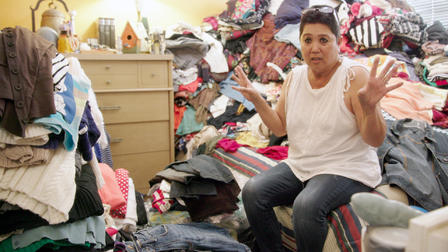
At the beginning of the first episode of Tidying Up with Marie Kondo, Ryan, a toddler who’d never met Marie, practically jumped into her arms. Ryan said, “I want to hug you.” She let Marie hold her like they go way back!
I was stunned because a toddler doesn’t do that. She doesn’t reach for a perfect stranger who just walked through her front door. And certainly not while being held in her mother’s arms. I said to myself, “Marie Kondo is something special.”
And she is. After binge watching all eight episodes of Tidying Up I bought two of Marie Kondo’s books, “The Life-Changing Magic of Tidying up,” and “Spark Joy: An Illustrated Master Class on the Art of Organizing and Tidying Up.” I will be getting “The Life Changing Magna of Tidying Up: A Magical Story.”
I’m already a minimalist. I did a massive decluttering the first half of 2018. What I am not is organized. And not being organized creates clutter and chaos, which gets on my last good nerve.
Netflix released Tidying Up on January 1, 2019. Marie, and her translator, help families in different stages in life declutter their homes.
What they all have in common is:

The communication issues between couples varied from resentment of who’s doing the household duties, to one person being more challenged by decluttering than the other, to what to keep (“we have to keep this ‘just in case’’ which is the death knell of tidyness).
The KonMari Method ™ is simple in theory. Tidy by category. Clothes first. Then books, papers, komono (miscellaneous items), and finally sentimental items. Keep the things that “spark joy.” In other words, keep the items you love. For the items you let go of, thank them for their service, then let them go. In the end, your home is full of only things you love. In practice, it’s a lot harder. I know because I started the process last week.
The show only touches on the KonMari Method of organizing. She has very specific ways of folding everything from underwear to hoodies. Buy her books because they are necessary to truly declutter and organize your home.
Once you finish the first season, watch the “Where Are They Now?” clips to see if the families kept their homes organized.
I love this show that inspired me to organize my home the KonMari way. I will let you all know how the process is going.
Ten out of Ten Mocha Angels.
Up next: “Us” (2019)



 Ms. Mocha Angel